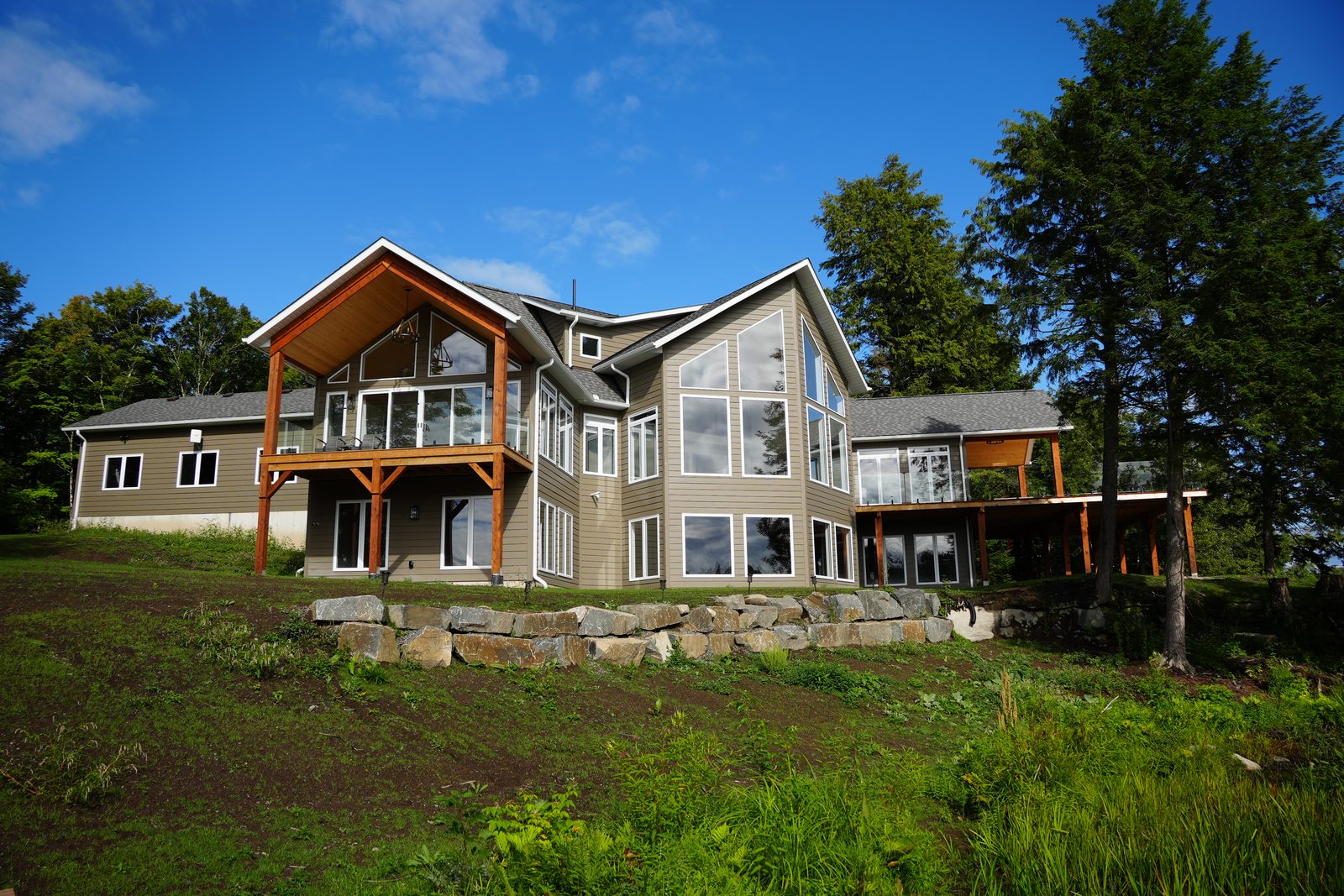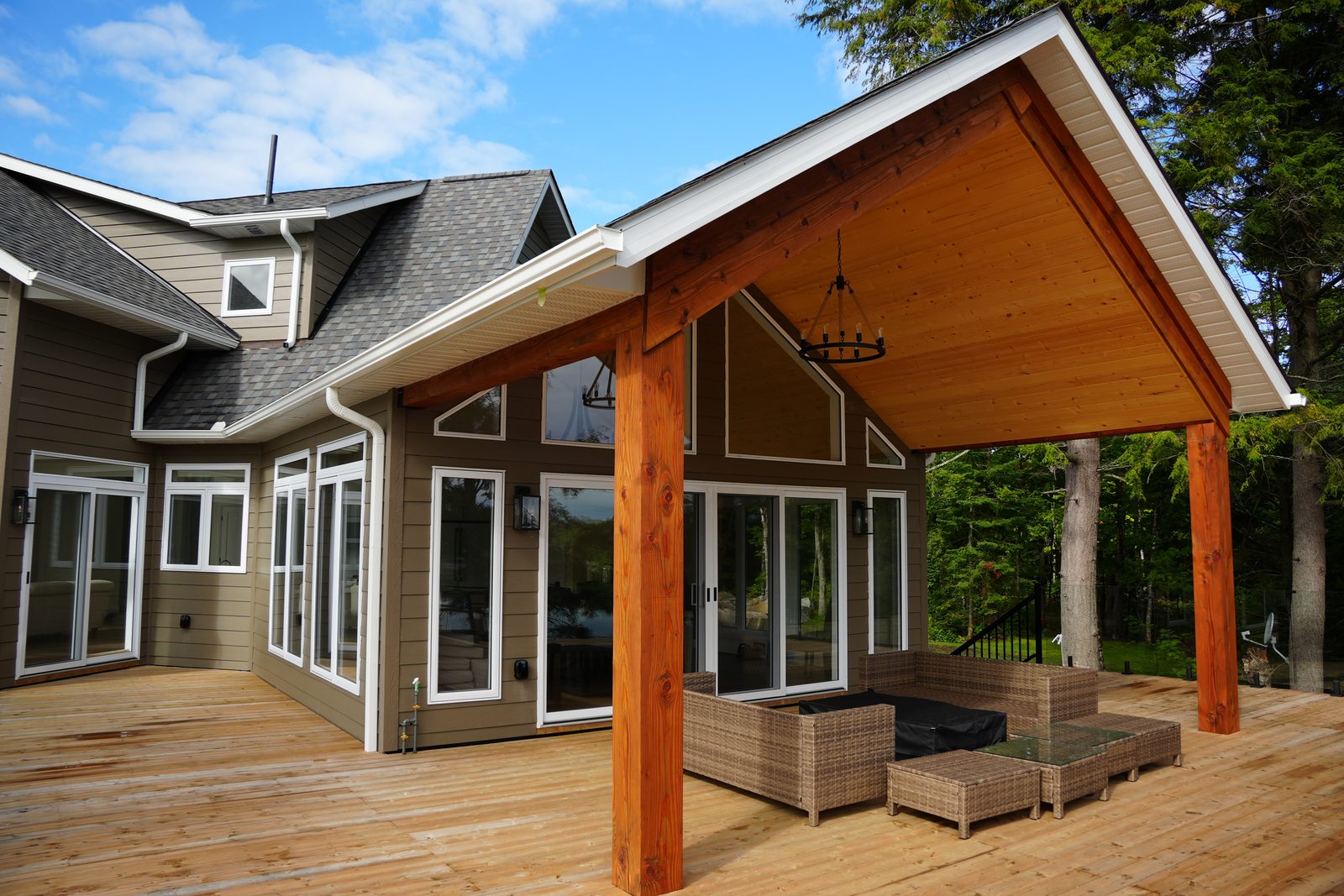
I coordinate our builds from framing through completion, which is the stretch when the plumbing, the drains and the heating go in, before the walls close over them. This is the order I would close a three-season cottage in Muskoka, and the reasons behind each step. Your own cottage will have its own quirks, so treat it as a checklist to adapt, not a script.
Drain it or heat it, but pick one
There are two honest ways to get a cottage through a Muskoka winter.
- Drain it. Turn off the water, empty every line, tank and fixture, protect the traps, and shut the building down. Nothing is left that can freeze.
- Heat it. Leave the heat on, set low but well above freezing, and keep the building warm enough that the water never gets the chance. That only works if the heat is reliable and somebody will know quickly when it stops.
The trouble starts with half of each: the heat left on low as insurance against a half-drained system, or a drained system with the pump still powered. A power failure in January turns the heated plan into an undrained cottage with no one watching, and a pipe in an outside wall freezes long before the middle of the room does. If you heat it, add a remote temperature alarm and a neighbour or caretaker who can get in. If you can do neither, drain it.
Water first: everything that holds it gets emptied
Work from the source to the fixtures, then open everything so the system can empty from its lowest points.
- Shut off the pump and the water supply. Turn the pump off at its breaker, not just the switch on the pump, so nobody can turn it back on by accident.
- Open every tap, hot and cold, upstairs and down, plus the outdoor taps and the shower. Air has to get in at the top for water to leave at the bottom.
- Drain the water heater. Shut off its power or fuel first. An electric element that switches on with no water around it burns out. Then run a hose from the drain valve to somewhere the water can go.
- Drain the pressure tank and the pump. Both have drain points. A pump that sits in a crawl space or a pumphouse holds water in its own casing.
- Deal with the intake line. If your water comes from the lake, the line usually ends in a foot valve whose whole job is to hold water in the pipe. That line has to be pulled, drained or blown out with compressed air. On Shield bedrock, lines often cannot be buried deep, so do not count on the ground to protect them.
- Empty the appliances. Dishwashers, washing machines and fridge water lines all hold water in pumps and valves. Follow each manual.
- Pull filter cartridges and anything else in a water treatment system that holds water.
Then leave the taps open. A closed tap on an empty line traps nothing, but an open one shows you, and whoever opens up in spring, that the system was drained on purpose.
Traps, toilets and a half cup of antifreeze
Draining the supply lines does not empty the drains. Every sink, tub, shower and floor drain has a trap, a bend that holds water on purpose to keep sewer gas out of the house. Toilets have one built into the bowl, and a tank on top.
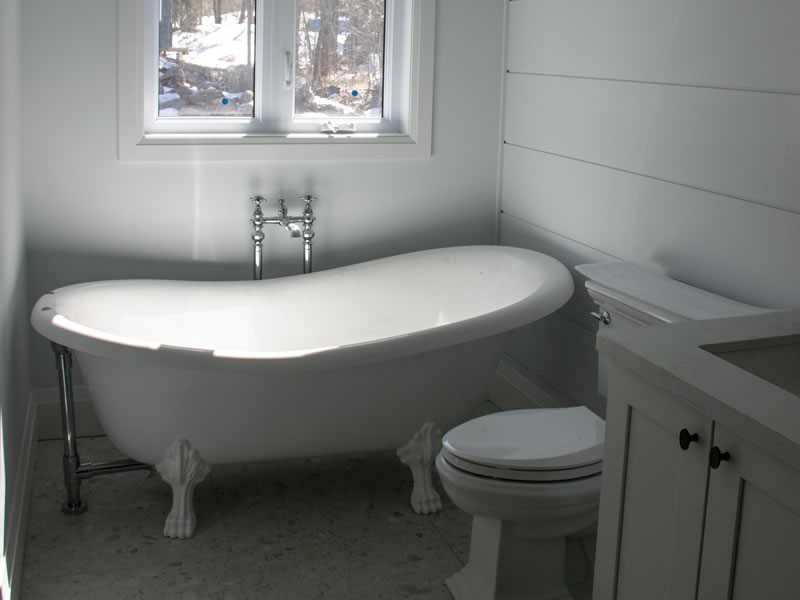
Flush the toilets once the supply is off, then sponge out what stays in the tank and the bowl. Cottage water systems author Max Burns, quoted in Cottage Life, recommends about half a cup of RV antifreeze in every toilet trap. Pour some into every other trap too.
Use RV or plumbing antifreeze, which is sold for exactly this and made to be non-toxic; most of it is propylene glycol. Never use automotive antifreeze. It is usually ethylene glycol, it is toxic, and it is going into your septic system.
Leave the septic alone, and keep everything off it
A properly installed septic system needs less at closing than most people assume. The two mistakes are doing too much to the tank and letting something heavy onto the bed.
Do not pump the tank on the way out. Sandy Bos, the on-site sewage system inspector for the Township of Muskoka Lakes, told Cottage Life that an empty tank is a liability over winter: with a high water table in spring, "even a concrete tank will float." If it is due for pumping, have it done in late summer so it can partly refill before you leave.
Keep vehicles off the tank and the bed. A plow, a truck or a snowmobile on the bed can damage pipes and compact the soil it relies on. Mark the area before the snow hides it, and tell whoever plows your road where not to go.
If your system pumps effluent uphill to its bed, that pump line is worth a look in the fall, while it is still easy to get at.
The building itself: power, fuel, mice and snow
- Power. Shut off everything that does not need to run. If you have a sump pump, it is one of the things that does.
- Fuel. If you drain and shut down, turn off fuel-burning appliances the way their manuals say. If you heat, have the appliance serviced before you leave rather than after it fails in February.
- Carbon monoxide alarms. Since January 1, 2026, Ontario’s Fire Code requires CO alarms in existing homes, cottages included, that have a fireplace or a fuel-burning appliance such as a furnace, water heater or stove. The HCRA’s summary puts them next to each sleeping area and on every storey, even storeys without bedrooms. Test them when you open up. An alarm whose battery died in February protects nobody in May.
- Mice. Take out all the food, including what is in sealed packages. Close up the gaps you can find around pipes and vents. A cottage left warm and stocked is an invitation.
- Snow and ice. Clear the gutters so meltwater has somewhere to go. On a heated cottage, ice dams form where warm attic air melts snow from below; on any cottage, someone should look in after a heavy snowfall or a thaw.
- Outside. Deck furniture, the barbecue, hoses and anything else that holds water or blows away goes in or gets covered.
Opening up starts with a water test
Spring is the reverse of the fall, with one step people skip. Close the taps, put the drain plugs back, prime the pump, refill the system slowly, then check every fitting and the water heater for leaks before you turn its power back on.
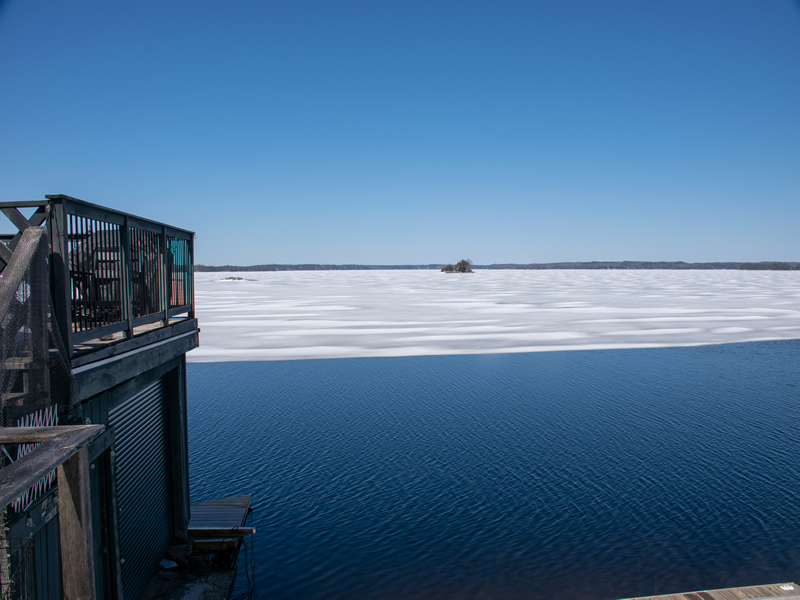
Then test the water before anyone drinks it. A well that has sat unused all winter, and the snowmelt soaking into the ground around it, are exactly when quality changes. Ontario’s guidance on private wells says more testing is needed around events such as the spring melt, and the test is free through Public Health Ontario: pick up a sample bottle from your local public health unit. It checks for E. coli and total coliforms only, not chemicals. Lake water is a different matter; treat it as untreated surface water and filter and disinfect it accordingly.
Or build a cottage you never have to close
Every step above is the price of a three-season cottage, paid twice a year. Some owners like the ritual. Plenty would rather drive up in February and turn the key.
A four-season cottage is one you never have to close. As we put it on our Muskoka cottage builders page, the insulation, heating, plumbing protection and often the road and water supply all have to be specified for January rather than July. It is a decision to make before the design is done: retrofitting a seasonal cottage for winter afterwards costs considerably more than building for it in the first place. It reaches down to the foundation as well, which we cover in how to build a cottage foundation.
The road matters as much as the walls. A lot that is easy to reach in August can be genuinely difficult in February. The well and the septic system are part of the site development we handle on rural lots, and on a cottage that will be used in January, they are planned for January too.
Where to start
If you are closing your own cottage this fall, write down what you did and where each drain point is. Next fall’s version of you, and whoever opens the place in spring, will both need it.
If you are planning a new cottage, decide early whether it will ever be used in winter. Our Country Retreats plans are designed specifically for cottage lots, and every plan is a starting point we fit to your lot. Tell us what you have and how you want to use it, and we will reply within two business days.
Frequently Asked Questions
When should I winterize my cottage?
Before the first stretch of nights below freezing, not after it. Water in a pipe in an outside wall or a crawl space can freeze well before the inside of the cottage feels cold. If your road gets hard to reach once the snow comes, close up before that too.
Can I leave the heat on instead of draining the cottage?
Yes, if the heat is reliable and someone will know quickly when it fails. Keep it set well above freezing, add a remote temperature alarm, and have a neighbour or caretaker who can get in. A power failure turns a heated cottage into an undrained one, so if you cannot watch it, drain it.
Should I pump the septic tank before closing the cottage?
Usually not right before you leave. An on-site sewage inspector for the Township of Muskoka Lakes, quoted in Cottage Life, warns that an empty tank can float if the water table is high in spring, even a concrete one. If pumping is due, do it in late summer so the tank can partly refill.
What kind of antifreeze goes in cottage plumbing?
RV or plumbing antifreeze, which is made to be non-toxic; most of it is propylene glycol. Put it in the traps of every sink, tub, shower and floor drain, and about half a cup in each toilet. Never use automotive antifreeze: it is usually ethylene glycol, it is toxic, and it ends up in your septic system.
Does my cottage need carbon monoxide alarms?
If it has a fireplace or a fuel-burning appliance such as a furnace, water heater or stove, yes. Ontario’s Fire Code changes that took effect January 1, 2026 cover existing homes including cottages, with alarms next to each sleeping area and on every storey.