Two Ontario programs started in April 2026. The first is the enhanced new housing rebate, which works on the 8% provincial part of the HST. The second is the Ontario New Home Affordability Payment, which works on the 5% federal part. Put the two maximums together and you get the figure that has been going around: $130,000.
That number is real, but it is a ceiling. Very few people will see all of it, and the reasons are worth knowing before you plan a budget around it. My side of A&R is accounting and administration, so the HST is the part of a build I think about most. Here is what each program pays, the dates that matter, and who can claim.
One thing first. We are builders, not tax advisors. Everything below is a plain-language reading of the Canada Revenue Agency’s GST/HST Notice 346, which is the authority on all of it. Before you count on a number, confirm it with your accountant and with the CRA.
What the Ontario enhanced new housing rebate pays
The Ontario enhanced new housing rebate does not sit on top of the old Ontario rebate; the two are counted together. With the existing Ontario new housing rebate, it provides combined relief of up to $80,000 of the 8% provincial part of the HST. How much of that you get depends on what the home is worth:
| Value of the new home | Provincial rebate |
|---|---|
| Up to $1 million | The full 8% provincial part of the HST paid, to a maximum of $80,000 |
| Above $1 million, up to $1.5 million | A flat $80,000 |
| Above $1.5 million, below $1.85 million | A partial rebate of the provincial part |
| $1.85 million and above | No enhanced rebate. Only the ordinary Ontario new housing rebate, up to $24,000 |
Two limits sit underneath that table. The total of every rebate on the provincial part can never be more than $80,000, and it can never be more than the provincial HST you actually paid. So on a smaller home, where 8% of the taxable cost comes to less than $80,000, the rebate is that smaller amount. The table is a set of caps, not a list of payments.
The Ontario New Home Affordability Payment, and why $130,000 is a ceiling
The Ontario New Home Affordability Payment is the other half of the headline. It is up to $50,000, the equivalent of up to 100% of the 5% federal part of the HST. You claim it through the same CRA rebate form, but the payment itself is administered and issued by the Province of Ontario.
Three conditions shape it, and each one pulls the real number below the maximum:
- You have to qualify for the enhanced rebate first. The affordability payment is only for people who are entitled to the provincial rebate. Miss the start window or go over the value limit and you lose both.
- It is reduced by any federal rebate you are entitled to. That includes the federal part of the GST/HST new housing rebate and the first-time home buyers’ GST/HST rebate. It only covers what those leave behind.
- The first-time buyers’ rebate comes first. If you are entitled to it, you claim it before the affordability payment is worked out. Whatever part of the federal HST it cannot cover, the Ontario New Home Affordability Payment may be able to pick up.
That is why $130,000 is a ceiling and not a forecast. It assumes the full $80,000 on the provincial side, which needs a home large enough to carry $80,000 of provincial HST and still under the value limit, and the full $50,000 on the federal side, after every federal rebate has had its turn. Your accountant can tell you where your own build lands. We would rather you heard “up to” from us now than found out at the end.
There is no separate application. On the rebate form, there is a section where you consent to the CRA sharing your contact, banking and rebate information with the Province. Tick it and, once the CRA has assessed your rebate, the Province pays the affordability payment separately. Leave it unticked and you have to send that information to the Province yourself. For technical questions about the payment, Notice 346 points to ServiceOntario at 1-800-267-8097.
The Ontario enhanced new housing rebate on your own land: the start window
When you build with us, the house goes up on your land. We visit your property, design a house that fits your lot, and build it there. In the CRA’s terms that is an owner-built home, and it still counts as owner-built when you hire a builder to do the work.
For an owner-built home, the enhanced new housing rebate has its own set of dates and tests:
- Construction must begin on or after April 1, 2026, and on or before March 31, 2027.
- It must be substantially complete before 2030. The CRA generally means 90% or more done, at a stage where you could reasonably live in it. Minor repairs and outstanding upgrades do not hold it back.
- The value is tested at substantial completion. The fair market value of the home at that point, land included, has to be under $1,850,000.
- It has to be a primary place of residence, for you or a relation.
Notice the first line. For an owner-built home the window is about when construction begins, not when you sign a contract or buy the lot. Notice 346 does not spell out what counts as the start of construction on a given build, so ask your accountant how the CRA would see your own start date before you rely on it.
What has to happen before the Ontario enhanced new housing rebate clock can start
A house does not start on the day you decide to build it. On our build process, the site visit, the custom design, the preliminary plans and the planning and permit approvals all come before site preparation and construction. Every one of those takes time, and the approvals run on the municipality’s timeline, not ours.
So if you are thinking about building and the rebate matters to your budget, the time to start the conversation is now, not in February. A window that closes on March 31 also closes before winter is over here, which is worth thinking about when you plan when site work can begin.
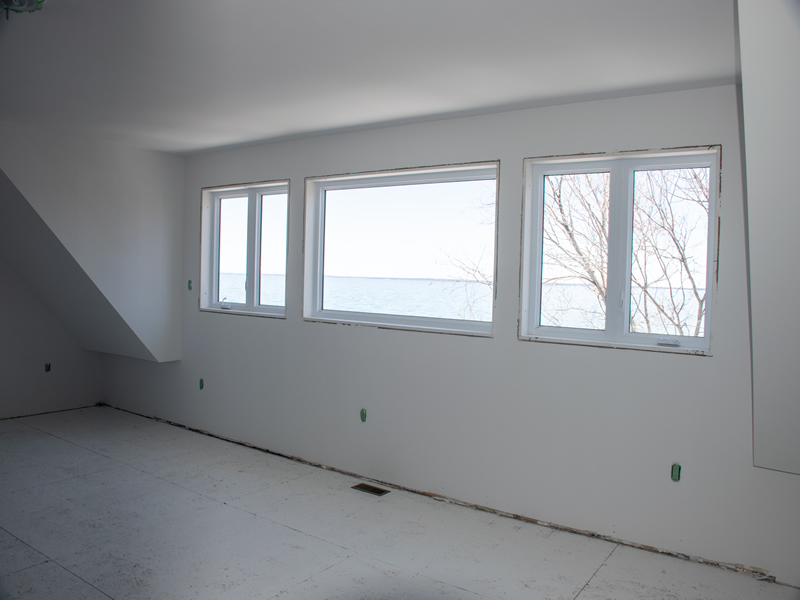
On a waterfront lot, the land is part of the number
For an owner-built home, the $1.85 million limit and the value bands apply to the fair market value of the whole property when the house is substantially complete. Not what you spent on construction. Not what you paid for the lot years ago. What the finished house and its land are worth on that day.
The CRA’s definition of the property includes the land the house sits on and the land immediately around it that contributes to its use as a home. The notice says the CRA considers up to half a hectare (1.23 acres) reasonably necessary for that, and in some cases more.
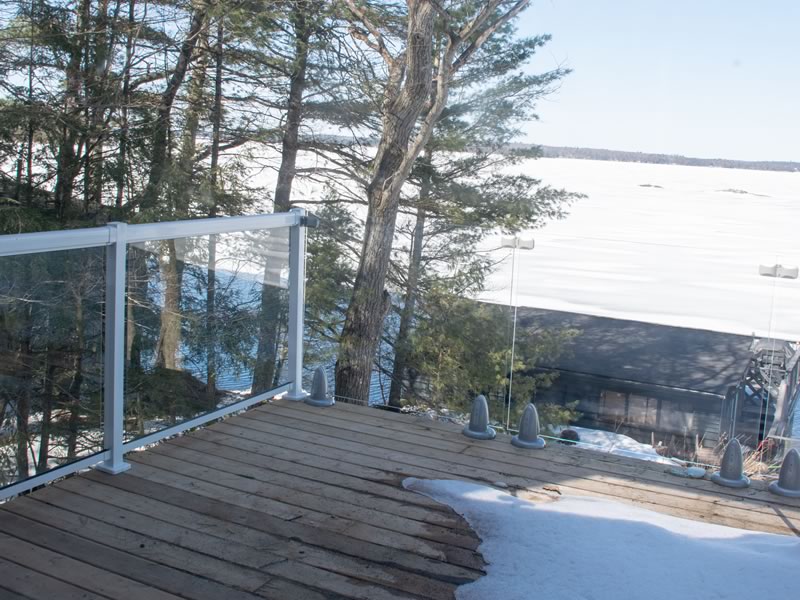
On a Muskoka or Georgian Bay waterfront lot, the land alone can be a large share of that value. It can move a build from the full-rebate band into the flat or partial band, or past $1.85 million altogether. That is a question to raise at the start of a project, while there is still time to plan around the answer, not at the end when the house is built. A waterfront build already has more rules than most; this is one more to put on the list early.
Buying a new home from a builder instead
If you are buying a finished or pre-construction home from a builder rather than building on your own land, the enhanced Ontario new housing rebate follows different dates:
- The agreement of purchase and sale has to be signed between April 1, 2026 and March 31, 2027.
- Construction has to begin by December 31, 2028.
- The home has to be substantially complete by December 31, 2031.
- The total price has to be under $1,850,000.
An agreement signed before April 1, 2026 and later changed or assigned is still treated as signed before that date, so it does not qualify for the enhanced rebate. The builder can pay or credit both the rebate and the affordability payment to you.
Who can claim the Ontario enhanced new housing rebate
Individuals only. A corporation or a partnership cannot claim it. If you were planning to hold a cottage in a company, that is a conversation for your accountant before the build, not after.
It has to be a primary place of residence. The home must be for use as your primary place of residence or a relation’s. The CRA defines a relation as someone related by blood, marriage, common-law partnership or adoption, and for this rebate a former spouse or common-law partner counts too. You can own more than one home, but you only have one primary place of residence. A weekend cottage, kept while you live somewhere else, is not it.
The forms, and what we give you
For a home built on your own land, you claim every new housing rebate on CRA Form GST191, with the Ontario schedule RC7191-ON. Buying from a builder, it is Form GST190 with schedule RC7190-ON. The consent section for the affordability payment is on the same form.
The claim is built on the HST you paid, so the paperwork has to show it. Our accountant prepares a statement of the accounts showing all the HST paid on your build, which is what you need to make the claim. We point you to the CRA’s own pages rather than our summary of them, and when a question belongs with your accountant, we will say so. There is more on how we handle it on our HST rebate page.
Before you count on the number
The enhanced HST new housing rebate can be worth a great deal on a new home, and the deadline is close. If you are weighing a build, three questions are worth answering early: will construction begin by March 31, 2027, what will the finished home and land be worth, and will it be your primary residence?
Take those to your accountant, read Notice 346 yourself, and if you want to know how the timing could work on your lot, tell us about your project. If we do not know an answer, we will point you to someone who does.
Frequently Asked Questions
What is the Ontario enhanced new housing rebate?
It is a provincial rebate that began in April 2026. Together with the existing Ontario new housing rebate, it returns up to $80,000 of the 8% provincial part of the HST on a new home used as a primary residence and valued under $1.85 million. The full rebate applies up to $1 million, a flat $80,000 from $1 million to $1.5 million, and a partial rebate up to $1.85 million.
Can I get the full $130,000?
Possibly, but treat it as a ceiling. The $80,000 provincial rebate is limited to the provincial HST you actually paid, and the $50,000 affordability payment is reduced by any federal new housing rebate or first-time home buyers’ rebate you are entitled to. Your accountant can work out where your build lands.
When does construction have to start if I build on my own land?
On or after April 1, 2026, and on or before March 31, 2027. The home must then be substantially complete before 2030. Design and permit approvals come before construction can begin, so start planning well ahead of the deadline.
Does the value of my land count toward the $1.85 million limit?
For a home you build on your own land, yes. The test is the fair market value of the home and its land at substantial completion, not what you spent building it. On a Muskoka or Georgian Bay waterfront lot, the land alone can push a home into a lower rebate band.
Can I claim it on a cottage?
Only if the cottage is the primary place of residence for you or a relation. You can own several homes but only have one primary place of residence, so a weekend or rental cottage does not qualify on that basis.
Do I apply separately for the Ontario New Home Affordability Payment?
No. You give consent on your GST/HST new housing rebate form for the CRA to share your information with the Province, and the Province pays it separately once your rebate is assessed. Without that consent, you send the information to the Province yourself.