I oversee site preparation and excavation on our builds, and on a rural lot in Simcoe County or Muskoka the well is part of that stage. The question people ask first is the price to drill a well. The more useful question is what that price is made of, because most of it is set by the ground and by Ontario’s Wells Regulation rather than by anybody’s sales pitch.
Why nobody can quote the final number in advance
A drilled well is a narrow, watertight casing, 10 to 20 cm across, set in a drilled hole. Ontario’s factsheet on private rural water supplies notes it can draw water from the sand and gravel above the bedrock or from the bedrock itself. Which one, and at what depth, is something the drill finds out.
So the price to drill a well is really a rate and a set of fixed items, applied to a depth that only becomes known once the rig is on your lot. A quote that gives one firm figure up front has either assumed a depth or folded the risk in somewhere. Neither is wrong, but you should know which you are looking at.
There is also a floor. Under the province’s well construction requirements, a new well must be at least 6 m deep unless the only useful water is shallower, and never less than 3 m. Where the water is deeper than 6 m, the casing has to reach at least 6 m below the original ground.
What the price to drill a well actually pays for
Most of what goes into a new drilled well is required by Regulation 903, the Wells Regulation. That is useful when you are reading a quote: these are not extras a contractor can talk you into or out of. The province’s technical bulletin on completing a new well’s structure and the construction chapter of its well manual set them out.
- The drilling. The hole itself, to whatever depth reaches a supply.
- The casing. From the water-bearing zone, or from the bedrock in a rock well, up to at least 40 cm above the highest ground within 3 m of the well. In solid bedrock, the casing has to be sealed into the rock.
- The seal around the casing. The best practice is a hole 10 to 20 cm wider than the casing, so the gap around it can be filled with sealant. This is what keeps surface water from running down the outside of the pipe.
- The yield test. Before the well is finished, the contractor must pump it at a steady rate for at least one hour, recording the water level as it drops and again as it recovers.
- The cap and the tag. A commercially made, vermin-proof well cap, and a well tag fixed to the casing.
- The paperwork. On the day the structure is complete, the contractor delivers an information package and a water sample, and measures the well’s depth with you there unless you say otherwise. The well record must reach you within 14 days.
A cheaper quote cannot legally leave any of that out. If it seems to, ask where it went.
What a drilling quote often leaves out
The bulletin treats the well’s structure as complete when it can be used, except for the pump and disinfection. In practice, that line is often where one quote ends and the next begins.
That matters for your budget, because a hole with a cap on it is not yet water at the kitchen tap. Between the two sit the pump, the line to the house, the pressure system, and whatever treatment your water turns out to need. The yield test is what sizes the pump: the province’s yield test guidance says the results are used to pick the right pump size and type and to estimate how much the well can sustainably give.
Treatment is the hardest piece to price ahead, because nobody knows what is in the water until it is tested. Bacteriological testing is free through Public Health Ontario, but it checks only for E. coli and total coliforms. Anything else is a separate test.
The ground under your lot sets most of the cost
Depth is the biggest variable on any drilling quote, and depth is a question about geology.
Across Muskoka, much of the land sits on the Canadian Shield, with bedrock often close to the surface. There, the water is usually in fractures in the rock, and the well goes as deep as it takes to cross enough of them. Off the Shield, where the ground is deep sand and gravel, a well may find water in that overburden without reaching rock at all, and its casing then has to reach down to the water-bearing zone instead.
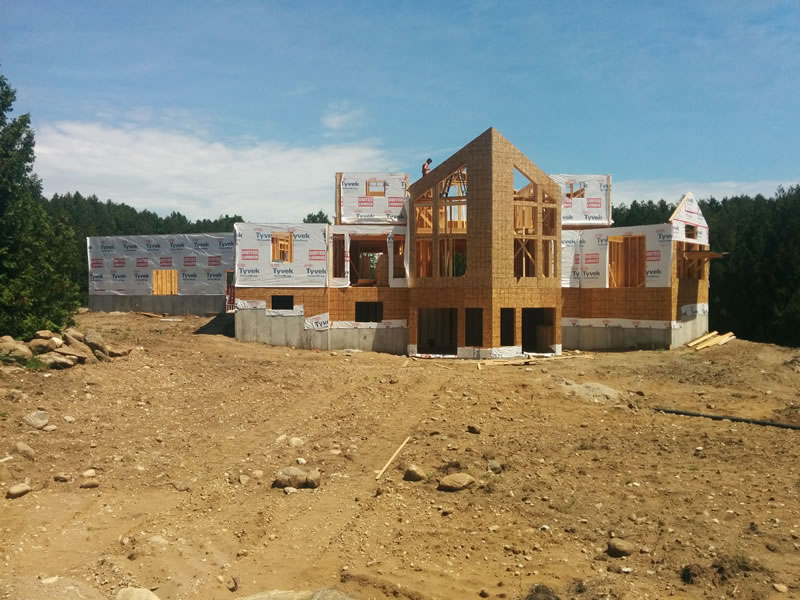
You cannot see any of that from the road. You can, however, see what your neighbours’ wells did. The province’s well records map lets you search reported wells by address and filter them by depth. A handful of records from the same concession road is the closest thing to a preview you will get before the rig arrives. Treat it as a guide only: the map includes only wells that were reported with enough information, and the ministry does not guarantee the records are complete or accurate.
Where the well goes is a cost decision too
The spot you drill decides how long the water line to the house is, whether the rig can reach it, and how it sits against the septic system.
The Ontario Building Code keeps the two apart. As the Town of Penetanguishene’s septic permit application sets out from Tables 8.2.1.6.A and B, the septic tank must be at least 15 m from a well. The leaching bed must be 15 m from a well with a watertight casing to a depth of 6 m, and 30 m from any other well. On a tight lot, that can push the well further from the house than you would like, and every extra metre is trench and pipe. Our post on dug vs drilled wells goes further into how the septic bed and the well share a lot.
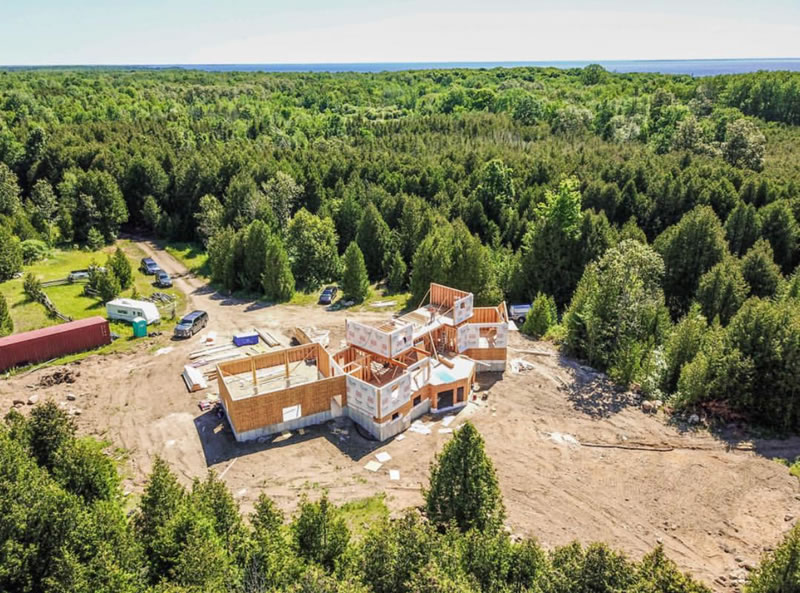
The rig needs a way in as well. On a wooded or sloped lot, that usually means the well is planned alongside clearing and the driveway, not after them.
If the lot already has an old well
Buying land with an existing well can change the arithmetic in both directions.
An old well cannot simply be left behind if you drill a new one. Under the Wells Regulation, a well has to be maintained or properly abandoned, which means plugged and sealed by a licensed contractor. That is a cost to plan for.
In Barrie and parts of Simcoe County, the Lake Simcoe Region Conservation Authority’s well protection and decommissioning program may help with it. It lists grants of 50% of costs, up to $1,500, for work such as decommissioning unused wells, replacing an old drilled-well pit with a pitless adapter, extending casing to 40 cm above ground, and fitting a proper cap. It does not cover new well drilling, pumps or water treatment. The work has to be done by a licensed well contractor, it needs two written quotations, and anything started before approval does not qualify, so apply first.
If you are not sure whether an existing well is worth keeping, find its record on the provincial map, look at the casing and the cap, and test the water before you budget around it.
How to compare two drilling quotes
Put two quotes side by side and ask the same questions of both.
- What depth is assumed, and what happens past it? If the quote is a rate per unit of depth, the total moves with the ground. If it is a fixed figure, find out what depth it was based on.
- How much casing, and is it sealed? The casing length and the seal around it are where a well’s protection comes from.
- Is the yield test included, and will you get the results? It is required, and the numbers size your pump.
- Where does the quote stop? Cap and tag, pump, line to the house, pressure system, disinfection, treatment. Get it in writing.
- Who is licensed? The province’s advice is a licensed well technician who holds, or works for the holder of, a well contractor licence. Well records carry the contractor’s licence number, so you can check it.
Where to start
Before you budget for a well, look up the reported wells near your lot, find out whether there is an old well to deal with, and walk the lot with the septic bed and the driveway in mind. The ground will set the depth; the plan can at least set where the rig drills and what the quote covers.
Well drilling and septic design and installation are part of the site preparation and site development we manage on rural builds, with one team on one schedule. Our post on what site preparation involves covers the rest of that stage. Tell us about your lot and what you hope to build, and we will reply within two business days.
Frequently Asked Questions
Why can’t a driller give me an exact price before drilling?
Because the biggest variable is depth, and depth is found while drilling. A drilled well draws from sand and gravel or from the bedrock below, and how far down a reliable supply sits differs from lot to lot. Searching the province’s well records map for wells near yours is the best preview you can get.
Is the pump included in the price to drill a well?
Often not. Ontario’s Wells Regulation treats the well’s structure as complete without the pump installation, and many drilling quotes stop there. Ask each contractor in writing whether the pump, the line to the house and the pressure system are included.
How deep does a new well have to be in Ontario?
At least 6 m, unless the only useful aquifer is shallower, and never less than 3 m. Where the water is deeper than 6 m, the casing must extend at least 6 m below the original ground surface.
Are there grants to drill a new well?
The Lake Simcoe Region Conservation Authority’s well program covers 50% of costs up to $1,500 for work like decommissioning unused wells, upgrading casing and fitting proper caps, but it states that new well drilling, pumps and water treatment are not covered. Check with your own conservation authority, and apply before any work starts.
What should I get from the contractor when the well is finished?
A well tag on the casing, a vermin-proof cap, an information package, a water sample, and the depth measured with you present unless you waive it. The well record has to reach you within 14 days, and it carries the yield test results that size your pump.