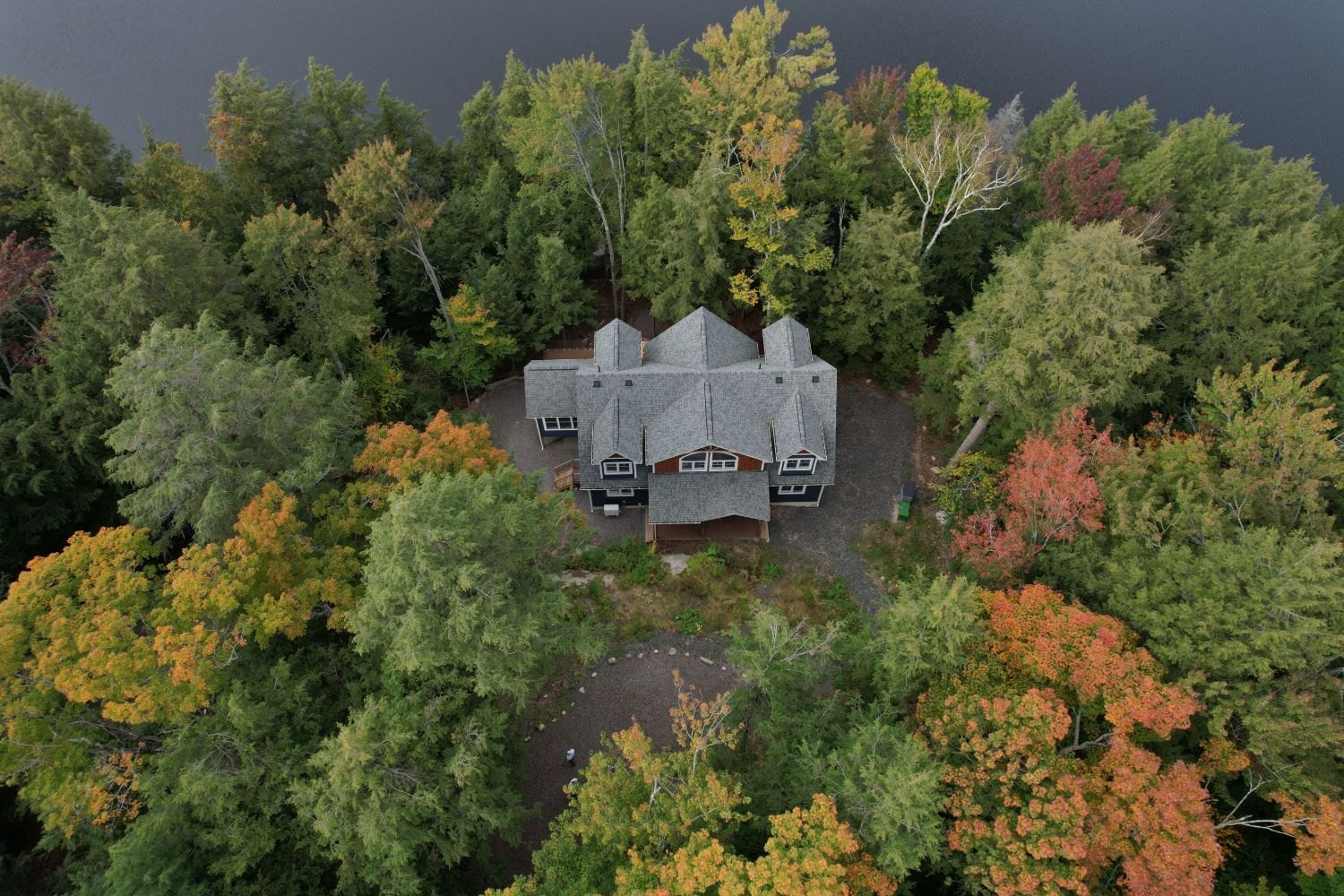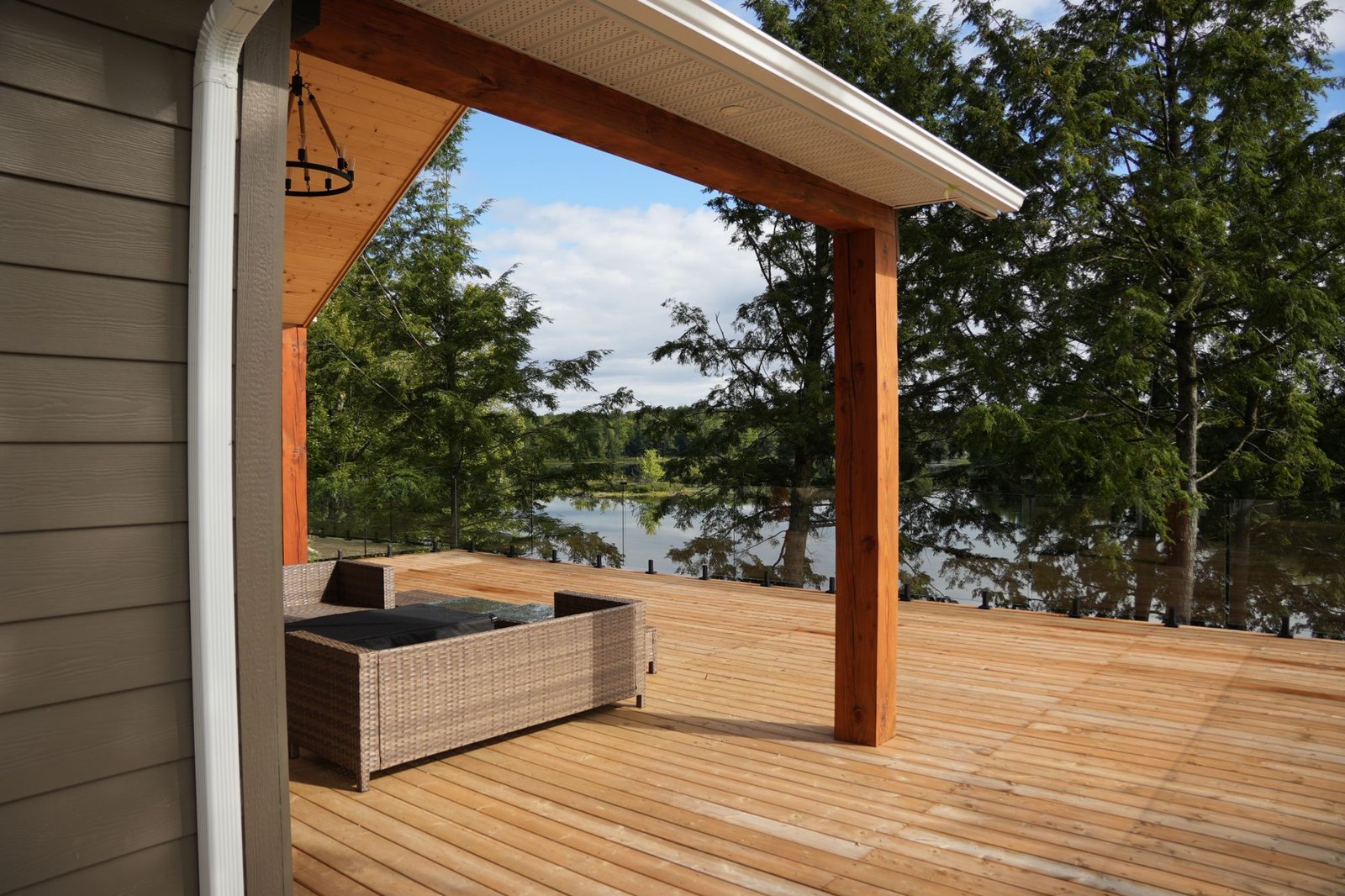
Windows are one of the exterior selections we work through in the Design Centre, alongside siding, stone, roofing, doors and trim. They are also the selection where a single word, triple, gets asked to carry the whole decision. It cannot. A window is a frame, a spacer, a coating, a gas fill and a certain amount of sun, and the number of panes is only one of those.
So this is the way I would think it through for a house or cottage in Central Ontario, starting with what the Code already asks and ending with the walls where a third pane genuinely changes how a room feels.
Are triple pane windows worth it when the Code is already met? Start there
Ontario sets its energy rules for new houses in Supplementary Standard SB-12, and the first thing it does is split the province in two. A building in a place with fewer than 5,000 heating degree-days is in Zone 1. At 5,000 or more it is in Zone 2, where the requirements tighten.
Across Simcoe County, Muskoka and Georgian Bay, every town SB-1 lists sits in Zone 1, some of them only just. SB-1 lists Collingwood at 4,180 degree-days, Midland at 4,200, Orillia at 4,260 and Barrie at 4,380. Further north it climbs: Parry Sound 4,640, Gravenhurst 4,760, Bracebridge 4,800 and Huntsville 4,850, which is 150 short of the line.
In Zone 1, a house heated by a high-efficiency gas furnace follows one of six compliance packages in Table 3.1.1.2.A. Five of them cap windows at a U-value of 1.6 W/m²·K and one at 1.4. With a mid-efficiency furnace, the packages in Table 3.1.1.2.B ask for 1.6, 1.4 or 1.2. With electric heat, Table 3.1.1.2.C asks for 1.4, 1.2, 1.2 or 1.6, depending on what else the package does.
Now put that beside what Natural Resources Canada says the glass can do. In its homeowner guide, Keeping the Heat In, NRCan notes that better double-glazed windows can reach 1.2 or lower, and triple-glazed windows can get as low as 0.8. So the honest starting point is this: a good double-glazed window meets every Zone 1 package. Nobody in this part of Ontario needs a third pane to pass inspection, so when people ask me are triple pane windows worth it, what they are really asking is what the third pane buys beyond the Code.
Three numbers on the label, and the one to ignore
Window quotes tend to arrive full of numbers. Three of them matter.
U-factor is the rate the whole window loses heat, in W/m²·K. Lower is better, and it is the inverse of an R-value. Solar heat gain coefficient, or SHGC, is the fraction of the sun's heat that gets through, from 0 to 1. Energy Rating, or ER, is a single figure that weighs the two against each other, along with air leakage.
For reference, ENERGY STAR certification in Canada currently asks for a U-factor of 1.22 or lower, or an ER of 34 or higher, under Version 5.0 of NRCan's specification. NRCan's Most Efficient designation for 2025 asks for 1.05 or lower, or an ER of 40. Set those beside NRCan's own figures, better double glazing at 1.2 or lower and triple at as low as 0.8, and the pattern is plain: a good double-glazed unit can reach ENERGY STAR, while 1.05 sits below what NRCan credits double glazing with.
The number to ignore is the centre-of-glass rating. It measures only the middle of the glass, away from the frame and the spacer, and NRCan's own guide says it makes a product appear more efficient than it really is. Ask for the overall U-factor of the whole unit, the one rated to CSA A440.2 or NFRC 100, because that is the figure SB-12 uses.
When the glass gets bigger, the Code gets stricter
This is the part of SB-12 most people never hear about, and on a view lot it changes the answer.
The compliance packages assume a normal amount of glass. Sentence 3.1.1.1.(8) lets you use them as written only where windows, sidelights, skylights, glazing in doors and sliding doors add up to no more than 17% of the gross wall area. Between 17% and 22%, Sentence (9) makes you step every window up one grade: a 1.6 requirement becomes 1.4, a 1.4 becomes 1.2, and a 1.2 becomes 1.0. Past 22%, the prescriptive packages are off the table altogether and the house has to be modelled for energy performance as a whole.
Look at that ladder again. At 1.0, you are below what NRCan says the better double-glazed windows reach. A house with a lot of glass can be pushed into triple-glazed territory by the Code itself, before anyone has made a choice about comfort.
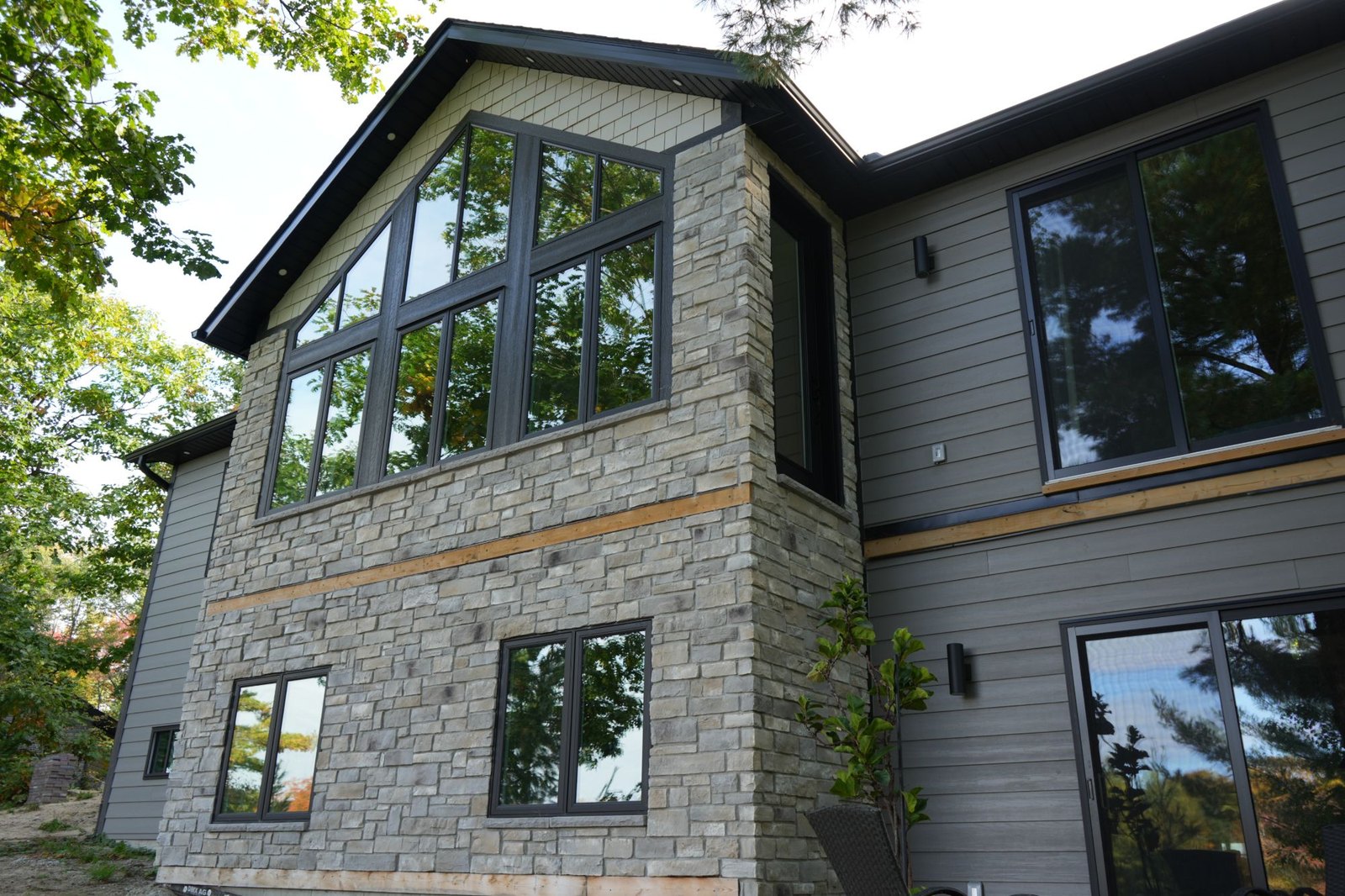
Are triple pane windows worth it on a wall of glass facing the lake?
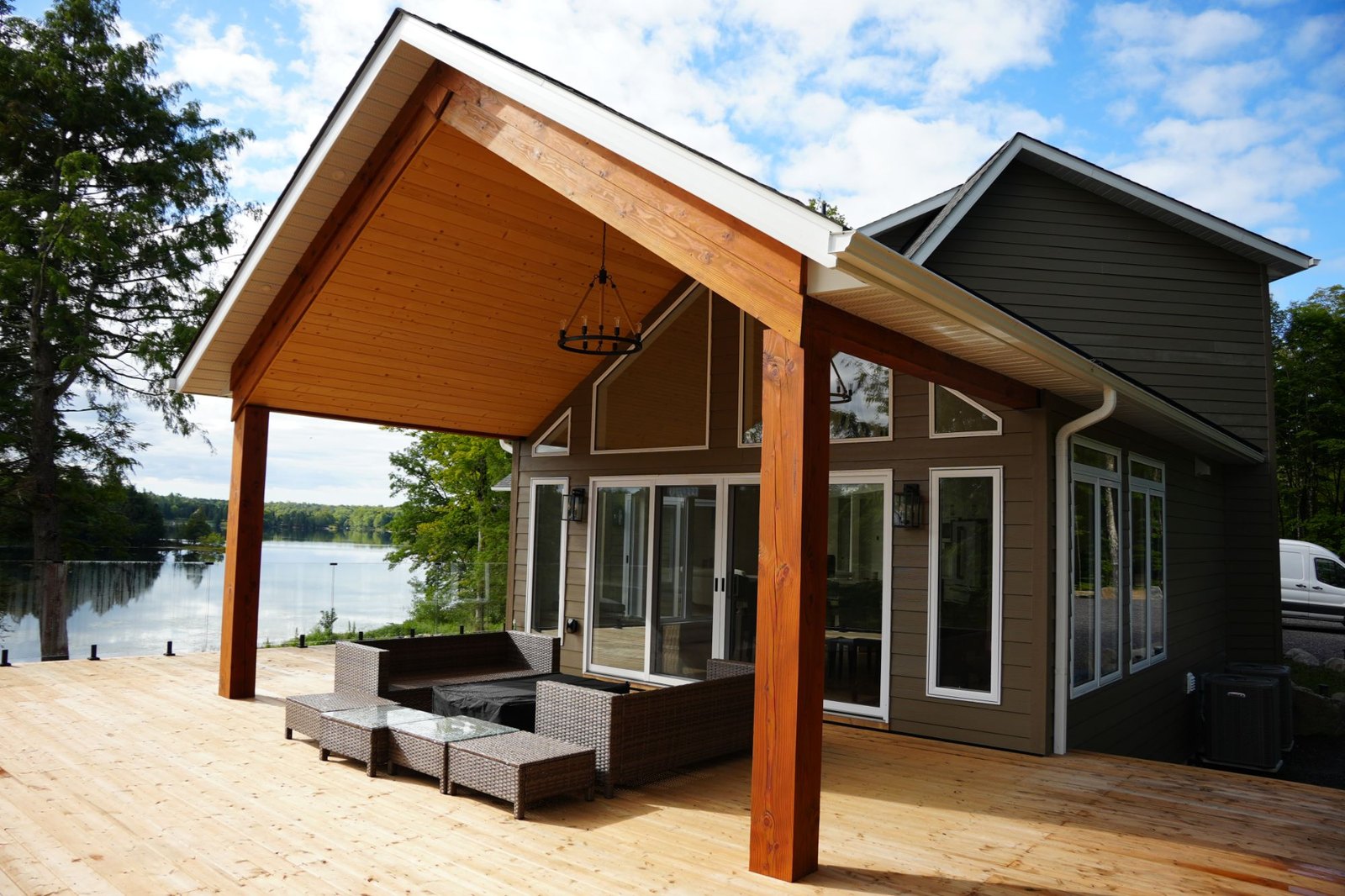
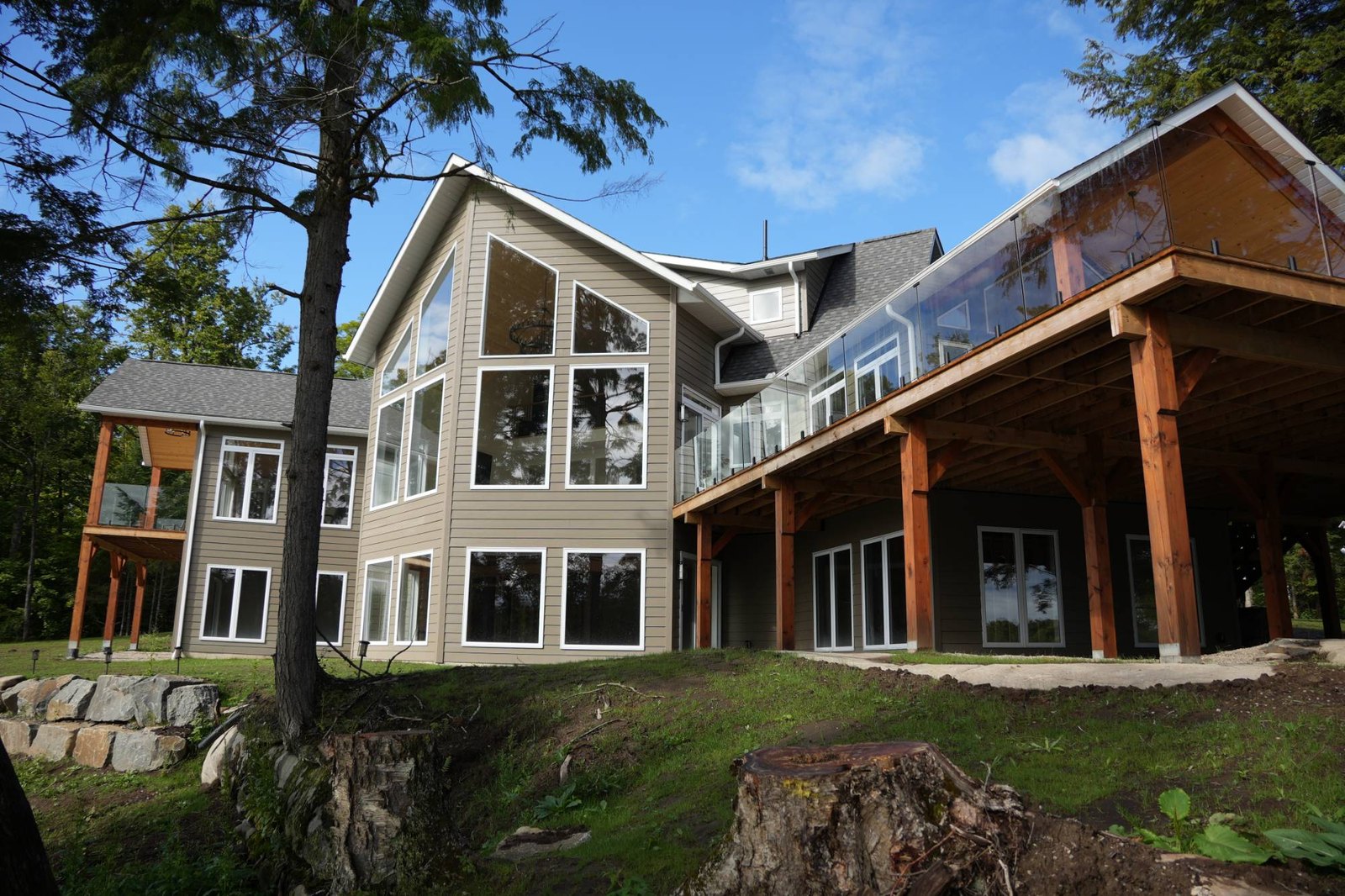
This is where the case is strongest. Our Panoramics plans are designed for lots with a view, with panoramic window walls and the living space turned toward the water. A wall like that can be most of an elevation, and it is the wall the family sits beside every evening from November to April.
The Panoramics page puts it plainly: large window walls work when they are specified rather than simply enlarged. Glazing, the coating, which way the wall faces and how far the roof projects over it decide whether the room is comfortable in August and in January. On that wall, a third pane is not a luxury line on the quote. It is often the difference between a room you use in winter and one you walk through.
Are triple pane windows worth it for comfort? More than for payback
Most articles answer this as a payback question: how many winters of lower heating bills to cover the extra cost. That depends on your heating fuel, your rates, your window sizes and the prices on your own quote, and anyone who gives you a single number without seeing all four is guessing.
The comfort argument does not depend on any of that, and NRCan has measured it. Table 9-1 in Keeping the Heat In gives the highest indoor humidity a window can sit beside before condensation forms, at different outdoor temperatures.
- At −20 °C, double-glazed low-E glass reaches its limit at 50% humidity. Triple-glazed low-E glass holds out to 67%.
- At −30 °C, the double-glazed figure falls to 42%. The triple-glazed one is still 60%.
Those temperatures are not hypothetical here. SB-1 puts the January design temperature for Barrie at −24 °C on its 2.5% basis and −26 °C on its 1% basis. Huntsville's are −26 and −29. A window that fogs, frosts at the edges and drips onto the sill on those mornings is a window running too cold on the room side, and that cold surface is also what you feel as a draft when you sit near it, even when no air is moving. NRCan's guide makes the same point about the coldest places: edges of the glazing fogging up and freezing are a bigger problem there, and triple glazing helps.
For a cottage that sits empty and unheated from Thanksgiving to May, most of this disappears. Glass that nobody sits beside in February is not costing anyone any comfort. For a home, or a cottage used through the winter, it is the strongest reason to buy the third pane.
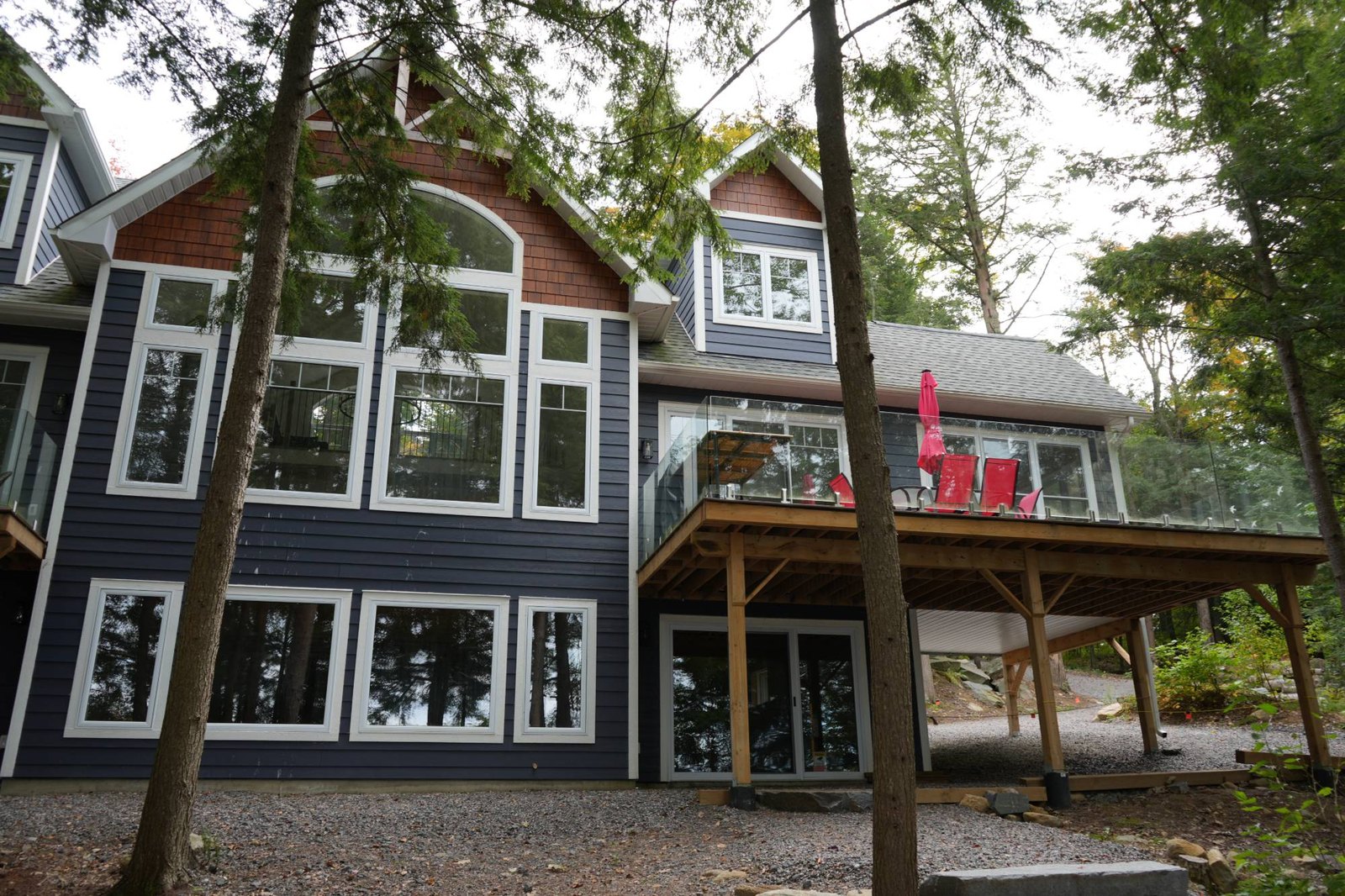
The sun is part of the bill, and a third pane can cost you some
A window does not only lose heat. On a clear winter day, a south-facing window gains it, and that free heat is part of the reason ENERGY STAR scores windows with an Energy Rating rather than a U-factor alone.
NRCan publishes the formula. Every 0.1 you take off the U-factor adds about 2.2 points of ER. Every 0.1 you take off the SHGC removes about 5.8. So a glazing package that lowers heat loss but also blocks a lot more sun can score no better, or worse, than one that lets the sun in. On a south wall, the coating and the solar heat gain coefficient matter as much as the pane count.
NRCan's rule of thumb for new homes in Canada is an SHGC between 0.3 and 0.4, with higher values suiting houses designed for passive solar heating. West-facing glass is the opposite problem. The Panoramics page notes that late sun arrives at a low angle no overhang can block, and it is handled with glazing choice and planting. A view west over the water is a reason to talk about the coating before you talk about the third pane.
Noise, weight and the frame around the glass
NRCan's guide says it simply: more glazing layers reduce outdoor noise coming into the house. If the lot backs onto Highway 400, or the bay carries the sound of boats all summer, that is a fair reason to lean toward triple on the side that faces it.
Weight is the other side of it. A third pane is heavier, and NRCan notes that some triple-glazed products swap one pane for a thin suspended film for exactly that reason. Big operable sashes and wide sliding doors are where the weight is felt, in the hardware and in how easily they open years from now. Ask how the unit you are being quoted handles it.
And look past the glass. The overall U-factor includes the frame and the edge of the glass, and NRCan points out that old-style aluminum spacers between the panes lose heat and cause condensation along the edges. A triple-glazed unit in a poor frame with a cold spacer can underperform a well-made double. The rating on the whole unit is what tells you, which is one more reason to ask for it rather than the centre-of-glass figure.
Why we would rather you decide it once
Our build packages describe what changes between Bronze, Silver, Gold and Platinum, and what does not. The envelope, the framing, the roof and the mechanical systems are built to the same standard whichever package you choose, because those are the parts nobody can economically revisit later. The same page puts it more bluntly: deferring finishes is reversible, deferring envelope quality is not.
Windows are envelope. You can repaint a room, change a light fixture or redo a backsplash in a weekend. Replacing a window wall means scaffolding, trim, drywall returns and exterior cladding, and it never happens for a third pane alone. If the glass on the view side is going to be triple, the time to say so is at the selection meeting, not five winters in.
Are triple pane windows worth it for the whole house? Go wall by wall
Rarely as a single yes or no. It is easier to answer one elevation at a time.
- The view wall and any large fixed glass in rooms you use all winter. This is where a third pane earns its place most clearly, for comfort and condensation first, and on a glass-heavy house the 17% rule may ask for it anyway.
- Bedrooms and bathrooms, where humidity runs higher and you notice a cold window first thing in the morning. Often worth it, especially in the northern half of our area.
- Small windows on the north and east, in halls, laundry rooms and closets. A good double-glazed, ENERGY STAR unit is usually the better use of the money.
- South glass in a passive-solar layout. Decide by Energy Rating rather than pane count, because the sun it lets in is part of what you are paying for.
- A seasonal cottage closed for winter. The comfort argument mostly falls away. Spend on the envelope you can never get back to.
Bring your drawings to the Design Centre and we will go through the windows elevation by elevation, with the overall ratings in front of you rather than a single word on a brochure. If you are weighing glazing alongside the rest of the mechanical design, our posts on net zero homes and HVAC design for a building permit cover how the two affect each other.
Frequently Asked Questions
Are triple pane windows required by the Ontario Building Code?
No. In Zone 1 of SB-12, which takes in everywhere from Collingwood and Barrie to Huntsville, the compliance packages ask for window U-values between 1.6 and 1.2, and NRCan notes that better double-glazed windows reach 1.2 or lower. The exception is a house with a lot of glass: above 17% of the wall area the Code steps every window up a grade, and 1.0 is lower than double glazing usually goes.
Do triple pane windows pay for themselves?
Sometimes, and it depends on your heating fuel, your rates, the size of the windows and the price difference on your own quote. Without all four, any payback figure is a guess. The more reliable return is comfort: a warmer inner pane, less condensation and a room you can sit in beside the glass in January.
Do triple pane windows stop condensation?
They reduce it a great deal. NRCan's figures put the condensation limit for double-glazed low-E glass at 50% indoor humidity when it is −20 °C outside, against 67% for triple-glazed low-E. Humidity still has to be kept in check, and a cold spacer or poor frame can still cause condensation around the edges.
Are triple pane windows worth it on a seasonal cottage?
Usually less so. If the cottage is closed and unheated through the coldest months, the glass is not costing anyone comfort or heat when it matters most. For a cottage used through the winter, the case is the same as for a house, and it is strongest on the large windows facing the water.
Are triple pane windows quieter?
Generally yes. NRCan's guide notes that more glazing layers reduce the outdoor noise that reaches the house. If one side of the lot faces a highway or a busy stretch of water, that is a good place to concentrate the upgrade.